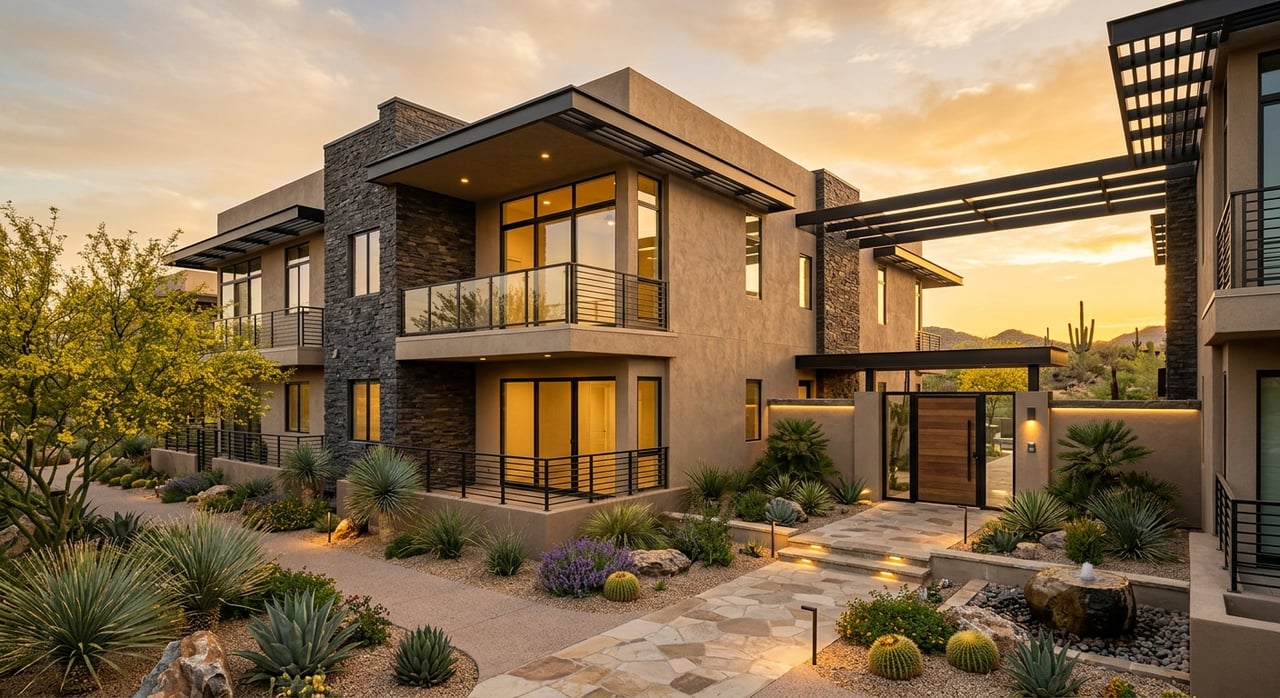
Paradise Investment Property: Condo or Single-Family Home?
May 28, 2026
May 28, 2026
Trying to choose between a condo and a single-family home in Paradise as an investment? The answer is rarely as simple as “buy the cheaper one” or “go for more space.” If you want a rental that fits your budget, your risk tolerance, and your management style, you need to look at how each property type actually performs in Paradise. Let’s break down what matters most so you can make a smarter move.
Paradise sits in unincorporated Clark County near the center of the Las Vegas Valley. Clark County notes that the Las Vegas Strip, the Las Vegas Convention Center, UNLV, and Harry Reid International Airport are all tied to this unincorporated area through location or regional services.
For you as an investor, that matters because proximity can support steady housing demand from people connected to tourism, conventions, air travel, and the university area. It also means Paradise is not a one-note market. Demand can come from several directions, which is useful when you are comparing rental property options.
One of the biggest differences between condos and single-family homes in Paradise is the entry price. Recent Redfin market data places Paradise’s overall median sale price at $400,000, with condos and co-ops at a median of $230,000 and single-family homes at a median of $446,250.
That spread is significant. If you are trying to enter the market with less cash up front, a condo may look much more accessible. If you have more capital and want a property type with fewer shared-community layers, a single-family home may feel like the better fit.
Here is the simple comparison:
| Property type | Median sale price in Paradise |
|---|---|
| Condo/co-op | $230,000 |
| Single-family home | $446,250 |
Price alone, though, does not tell you which one is the stronger investment. In Paradise, the details behind the monthly costs and property rules can change the math fast.
For many investors, the biggest advantage of a condo is clear. You can often buy in at a much lower price point than a single-family home.
That lower purchase price may help you preserve cash for reserves, improvements, or even a second investment later. It can also make it easier to test the Paradise rental market without taking on the larger upfront commitment that usually comes with a detached home.
Another practical appeal is maintenance. In a common-interest community, shared exterior areas and common elements are generally managed by the association. If you want a property with less direct maintenance responsibility day to day, that can be attractive.
In Paradise, condo investing is not just about the purchase price. It is also about the homeowners association and the financial health of the community.
Under Nevada common-interest-community law, owners pay assessments for common expenses, and the association board manages community money and maintenance of common elements. Owners are also bound by the declaration, bylaws, rules, and other governing documents.
That means your monthly payment picture may be more complex than it first appears. A condo with a low list price can become less attractive if dues are high, reserves are weak, or future special-assessment risk looks meaningful.
Nevada’s resale-package rules make condo due diligence essential. The package must disclose items such as:
Nevada also requires reserve studies and annual review of whether reserves are sufficient. For you, that means the HOA is not a side issue. It is central to whether the investment works.
When you review a Paradise condo, pay close attention to:
A condo can still be an excellent investment in Paradise. You just want the underwriting to reflect the full ownership picture, not only the mortgage payment.
If you prefer a more direct ownership structure, a single-family home may be easier to evaluate. In general, a fee-simple single-family home that is not part of a common-interest community avoids the HOA assessment and reserve framework that condo buyers face.
That can give you more control over operations and fewer community-level unknowns. You may also deal with fewer association approvals and fewer building-wide rules.
For some investors, that simplicity is a major advantage. If you want clearer control over leasing, maintenance timing, and property decisions, a single-family home may better match your style.
The tradeoff is cost. Paradise single-family homes have a much higher median sale price than condos, so you usually need more capital to get in.
That higher entry point can affect your down payment, financing strategy, cash reserves, and return targets. If your budget is tight, the detached-home option may limit your flexibility compared with a condo purchase.
You also take on more direct responsibility for upkeep. Without the HOA handling shared maintenance, you are the one planning for repairs, replacements, and long-term capital costs.
Paradise has signs of an active rental market. Census QuickFacts lists the owner-occupied housing unit rate at 41.9% and median gross rent at $1,372 for 2020 through 2024. Redfin also showed average rent of $1,400 in August 2025 and 627 rental listings in the market.
Taken together, those figures support the idea that Paradise has a real rental base. That is good news whether you are leaning toward a condo or a single-family home.
Still, broad market activity does not guarantee that every property performs the same. Your actual outcome will depend on the exact location, condition, layout, monthly carrying costs, and rent level relative to nearby competition.
Before you buy, make sure your intended rental strategy matches the property’s rules. This is especially important for condos and other common-interest-community properties.
Nevada law allows associations to enforce rental-related provisions in their governing documents. If renting was not already prohibited when you bought, the association generally may not later ban leasing outright, but the declaration can include a cap on the number or percentage of rentals. Associations may also require lease registration, though they cannot charge a fee for that submission.
For you, this means a condo that looks promising on paper may have leasing limits that affect vacancy risk or future flexibility. Always confirm the current rules before you count on long-term rental income.
This is one of the biggest mistakes investors can make in Paradise. Being near the Strip does not automatically mean a property can be used for short-term rental activity.
Under Nevada’s common-interest-community framework, transient commercial use means occupancy for less than 30 consecutive calendar days. That use is allowed only if the governing documents and any master association do not prohibit it, the board approves it, the unit is properly zoned, and any required local license is obtained.
Clark County also states that short-term rentals in unincorporated Clark County must be licensed as commercial businesses, and operating without a valid unexpired short-term rental license is prohibited and unlawful. Since Paradise is in unincorporated Clark County, you should verify county licensing requirements and HOA permission before pursuing any short-term rental plan.
In Paradise, the better investment is usually property-specific, not category-specific. A condo may be the right choice if you want a lower entry price and less direct maintenance responsibility. A single-family home may be the better fit if you want more control and fewer association constraints.
A smart way to decide is to compare each option through the same lens:
If you run those numbers carefully, the “better” investment often becomes much clearer.
Before you buy a condo or single-family home in Paradise, focus on these local due-diligence items:
These steps can help you avoid buying a property that looks good at first glance but creates problems after closing.
In a market like Paradise, your edge often comes from careful review rather than quick assumptions. If you want help comparing condos, single-family homes, rental numbers, or resale potential in the Las Vegas area, AGENT HOUSE can help you evaluate the options with a local, practical lens.
Stay up to date on the latest real estate trends.
Whether you’re buying, selling, or exploring your options, our team is here to guide you with care, strategy, and results that speak for themselves.
8488 ROZITA LEE AVE BLDG 3 STE 100 LAS VEGAS NV 89113