Essential Guide to North Las Vegas Rental Properties
April 2, 2026
April 2, 2026
Are you trying to make sense of the North Las Vegas rental market without overcomplicating the numbers? If you own one rental home or are thinking about buying one, you need a clear picture of local demand, pricing, upkeep, and Nevada rules before you set your next move. This guide breaks down what small landlords should know about North Las Vegas rentals so you can make practical, informed decisions. Let’s dive in.
North Las Vegas is not a niche rental market. According to U.S. Census Bureau QuickFacts for North Las Vegas, the city had an estimated population of 294,034 in July 2024, up 13.3% from the 2020 Census base.
That growth matters if you own or plan to own a rental. The same Census page shows an average household size of 3.12 people, which helps explain why larger homes often play an important role in this market. For many small landlords, that means single-family homes with multiple bedrooms may fit local demand better than smaller unit types.
Affordability pressures also shape the rental landscape. The Nevada Housing Division’s North Las Vegas housing report found a 4.8% renter vacancy rate, 55.9% cost-burdened renters, 45.2% excessively cost-burdened renters, and an 8,322-unit shortage of affordable renter housing.
That same report projected a need for 1,061 additional rental units between 2024 and 2029. In simple terms, demand pressure is still present, even if pricing and lease-up timing vary from one property to another.
If you picture North Las Vegas as mostly apartment buildings, the data tells a different story. The state housing report shows that 75.5% of occupied housing units are 1-unit detached homes, while 3.5% are 1-unit attached.
Small multifamily properties make up a much smaller share of the local stock. Only 1.7% of occupied units are in 2-unit buildings, and 5.3% are in 3- or 4-unit buildings, according to the same state housing report.
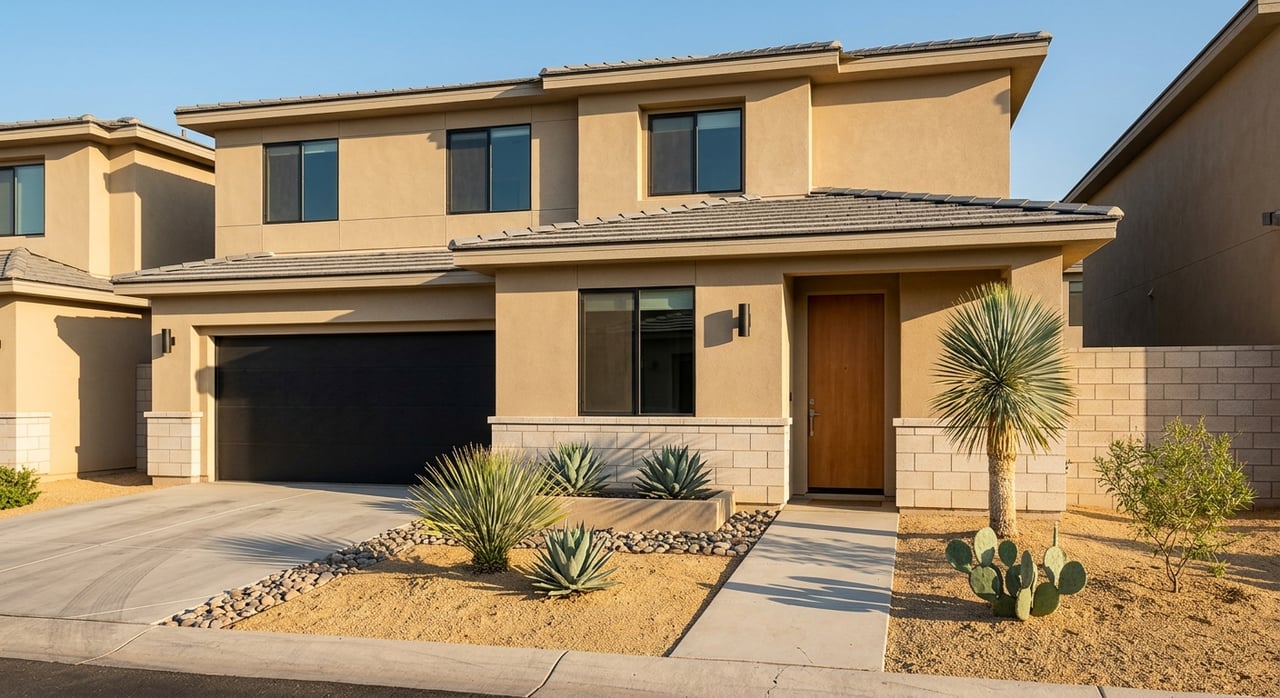
For you, this means the typical small landlord conversation in North Las Vegas is often about a single-family rental, not a duplex portfolio. That can affect everything from maintenance budgeting to comparable rents to tenant expectations around parking, yard space, and storage.
Rent data in North Las Vegas depends on what you are measuring. Zillow’s North Las Vegas rental market page shows an average asking rent of $2,100 across property types, with 552 active rentals and listed prices ranging from $700 to $6,000.
Zillow also breaks current asking rents down by bedroom count:
Those numbers are useful, but they are not the only benchmarks. The Nevada Housing Division report lists a median contract rent of $1,508, while Census QuickFacts reports a median gross rent of $1,705 for 2020 to 2024.
These figures are different because they describe different things. Asking rent reflects today’s active listings, while contract and gross rent figures capture occupied housing and broader survey measures. If your property is updated, well-presented, or includes features tenants value, it may reasonably compete above older occupied-unit medians.
It helps to treat rent pricing like a range, not a single magic number. Zillow currently labels the North Las Vegas rental market as “warm,” with average rent down $50 year over year but up $85 month over month on its local trends page.
That kind of mixed signal is common in real life. A market can still have active demand while also rewarding landlords who price carefully and present their homes well.
The vacancy data tells a similar story. The Nevada Housing Division report shows a 4.8% renter vacancy rate, which suggests there is turnover and available supply, not a market where every listing fills instantly.
For a small landlord, the takeaway is straightforward:
A vacant month can wipe out the benefit of holding out for a slightly higher number. In a market with active options, tenants compare value quickly.
North Las Vegas housing stock is not brand new overall. The state housing report found that 66.1% of occupied units were built from 1990 to 2009, 14.2% were built in 2010 or later, and 19.8% were built in 1980 or earlier.
The report also lists a median year built of 1999 for renter-occupied units. That matters because many small landlords are operating homes that may need periodic HVAC, plumbing, appliance, flooring, or paint updates rather than only routine cosmetic touch-ups.
If your property falls into that common age range, proactive maintenance can protect both rent level and leasing speed. A home does not need to be fully remodeled to compete, but clean condition, working systems, and solid presentation are often the difference between strong interest and extended vacancy.
Because North Las Vegas has a relatively large average household size, family-sized homes are especially relevant here. That local context lines up with Zillow’s pricing spread, where three-bedroom and four-bedroom rentals command materially higher asking rents than smaller units.
This does not mean every larger home will outperform automatically. It does mean you should evaluate bedroom count, layout, parking, storage, and outdoor maintenance needs as part of the rent strategy, because those features may influence how your home fits the local renter pool.
If you want another pricing reference point, Clark County’s FY 2026 Fair Market Rent documentation for the Las Vegas-Henderson-North Las Vegas MSA provides metro-level benchmarks:
These are metro-level standards, not city-only averages. Still, they can help you frame where your North Las Vegas rental sits relative to broader regional benchmarks for standard-quality gross rents.
Good operations are not just about rent collection. Nevada landlord-tenant rules affect how you handle deposits, rent increases, and access to the property.
Under Nevada Revised Statutes Chapter 118A, landlords must provide an itemized written accounting and return any remaining security deposit within 30 days after the tenancy ends. Deductions are limited to amounts reasonably necessary for unpaid rent, damage beyond normal wear and tear, and reasonable cleaning.
Nevada also requires at least 60 days’ written notice before a rent increase for periodic tenancies of one month or more. For periodic tenancies shorter than one month, the notice period is 30 days.
For non-emergency entry, landlords generally must give at least 24 hours’ notice and enter only at reasonable times. These rules are simple on paper, but they are easier to manage when your documentation, communication, and inspection process are consistent.
Nevada’s housing discrimination law in Chapter 118 prohibits discrimination in renting on protected bases. For small landlords, that means your advertising, screening, approvals, denials, and lease enforcement should be consistent and documented.
This is one of the biggest reasons to have a repeatable process. Clear criteria, consistent communication, and clean records help reduce confusion and support compliance.
If you own a North Las Vegas rental, focus on the basics that most directly affect results:
Small changes in execution can have a big impact on vacancy, tenant experience, and net results.
North Las Vegas offers real opportunity for small landlords, especially if you own or are considering a single-family rental. The city’s growth, larger household sizes, and ongoing rental demand create a solid backdrop, but success still comes down to pricing discipline, property condition, and compliant operations.
If you want help evaluating a North Las Vegas rental, planning a purchase, or preparing a property for lease or resale, connect with AGENT HOUSE. You will get local insight, practical guidance, and high-touch support tailored to your goals.
Stay up to date on the latest real estate trends.
Whether you’re buying, selling, or exploring your options, our team is here to guide you with care, strategy, and results that speak for themselves.
8488 ROZITA LEE AVE BLDG 3 STE 100 LAS VEGAS NV 89113